

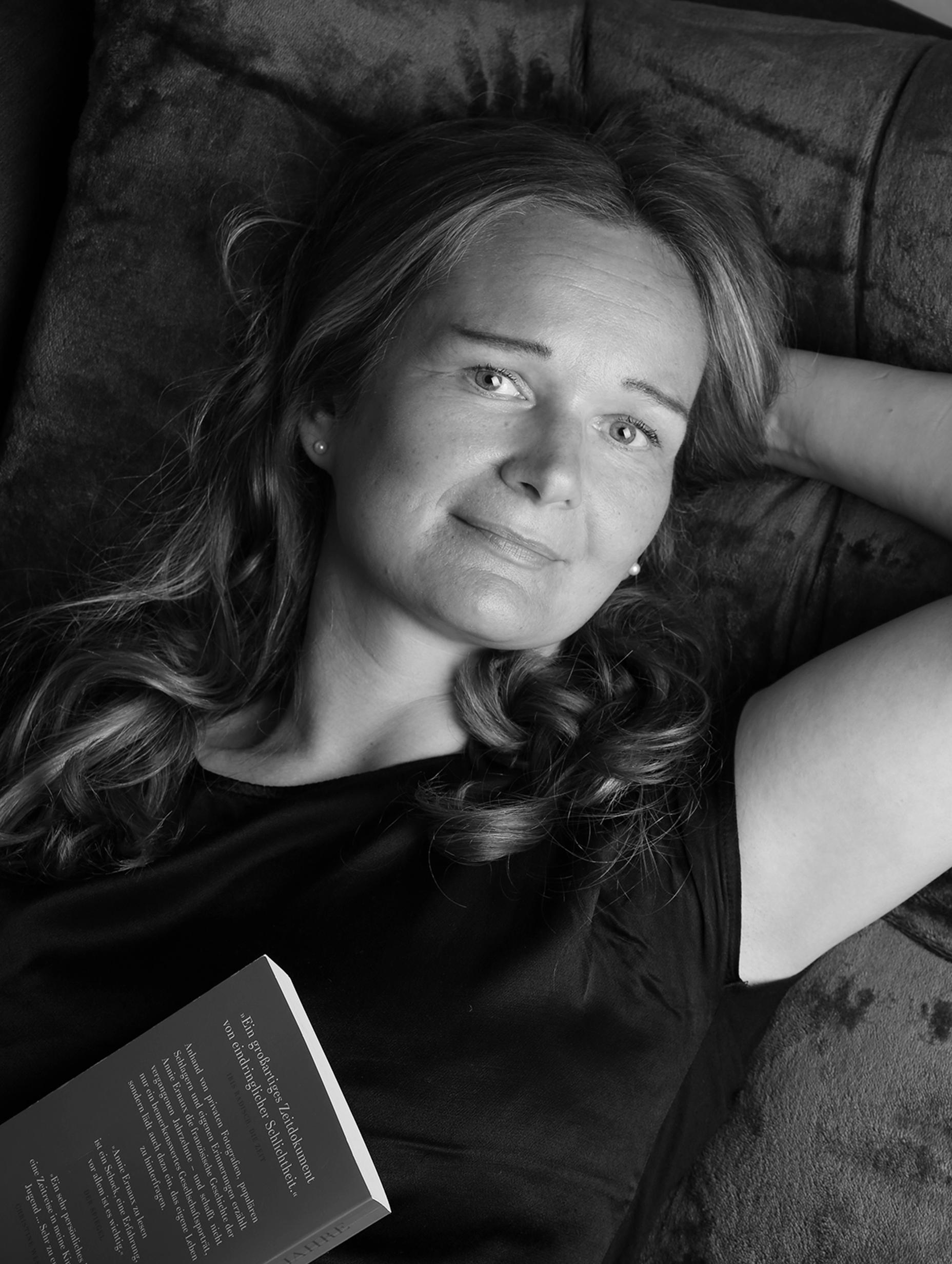
Meine Gedichte
Ich habe angefangen zu schreiben, weil ich mich durch Sprache spüren konnte. Worte waren für mich nicht nur Ausdruck, sondern Berührung – sie ließen mich fühlen, wer ich bin, bevor ich es verstand. In meinen Gedichten wird meine Person sichtbar: jede Silbe, jeder Satz ist ein Tastversuch, eine Spur auf der Haut.
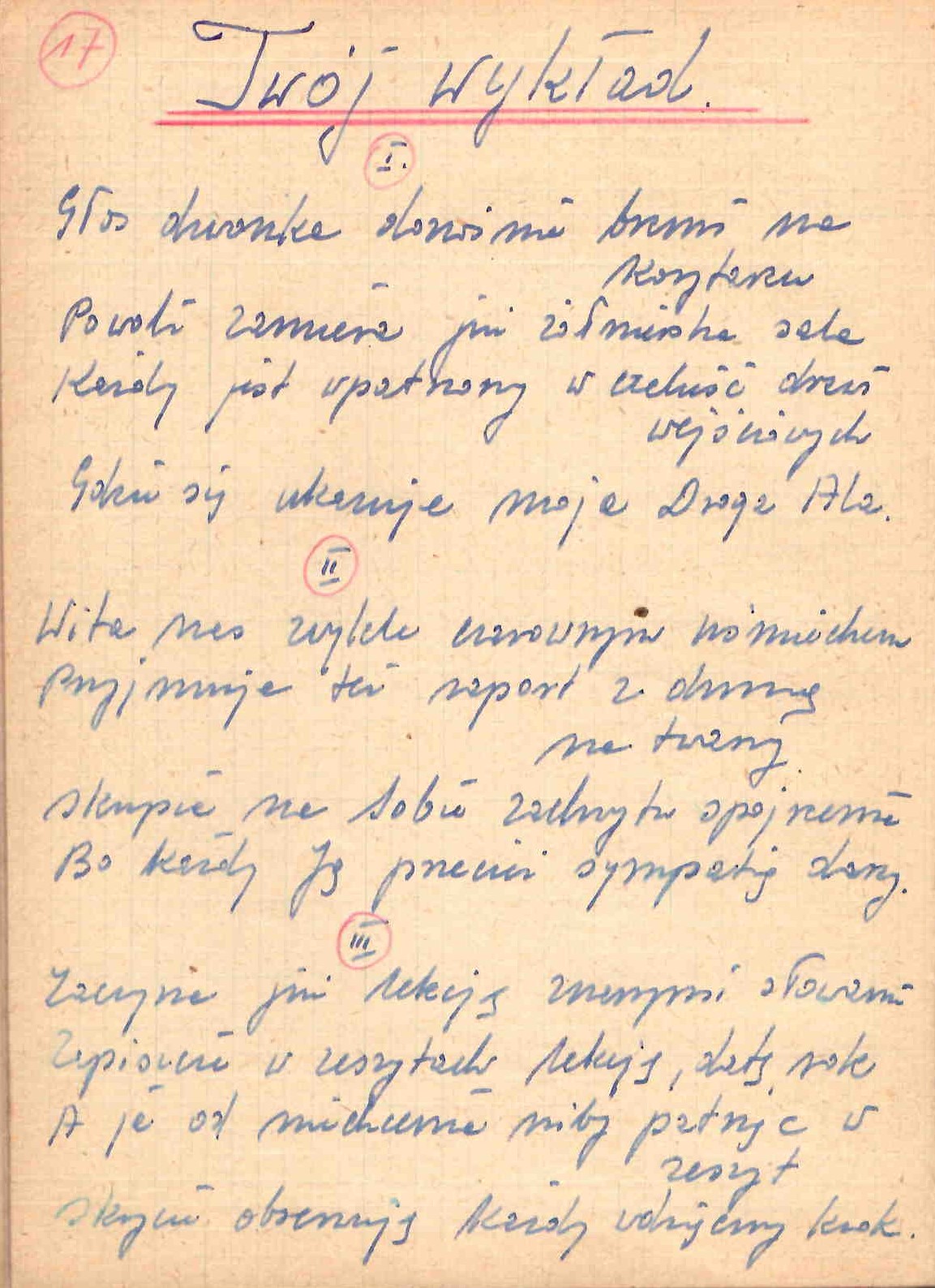
Die Gedichte meines Stiefopas
Ein kleines Stück Familiengeschichte. In diesem handgeschriebenen Heft hat mein Stiefopa seine Gedanken mit Tinte, Sorgfalt und Herz festgehalten – Worte, die bis heute nachklingen.
MEINE GEDICHTE:
1
Wortliebe / Word Love / Miłość do słów

Wortliebe 🇩🇪
Ich liebe Wörter,
wie andere Menschen Mückenstiche hassen.
Ich kratze an ihnen,
bis sie bluten.
Ich lege sie mir auf die Zunge
wie bittere Bonbons.
Ich sammle sie
unter der harten Matratze.
Ich stopfe sie
in meine Taschen.
Ich schreibe sie
auf Einkaufszettel –
und dann kaufe ich nichts
außer: Bedeutung.
Word Love 🇺🇸/🇬🇧
I love words
the way other people
hate mosquito bites.
I scratch at them
until they bleed.
I place them on my tongue
like bitter candies.
I hide them
under the hard mattress.
I stuff them
into my pockets.
I write them
on shopping lists
–and then
buy nothing
except:
meaning.
Miłość do słów 🇵🇱
Kocham słowa
tak, jak inni ludzie
nienawidzą ukąszeń komarów.#
Drapię je
aż zaczną krwawić.
Kładę je sobie na języku
jak gorzkie cukierki.
Chowam je
pod twardym materacem.
Wpycham je
do kieszeni.
Zapisuję je
na listach zakupów –
a potem
nie kupuję nic
poza:
znaczeniem.
Ich liebe Wörter,
wie andere Menschen Mückenstiche hassen.
Ich kratze an ihnen,
bis sie bluten.
Ich lege sie mir auf die Zunge
wie bittere Bonbons.
Ich sammle sie
unter der harten Matratze.
Ich stopfe sie
in meine Taschen.
Ich schreibe sie
auf Einkaufszettel –
und dann kaufe ich nichts
außer: Bedeutung.
Word Love 🇺🇸/🇬🇧
I love words
the way other people
hate mosquito bites.
I scratch at them
until they bleed.
I place them on my tongue
like bitter candies.
I hide them
under the hard mattress.
I stuff them
into my pockets.
I write them
on shopping lists
–and then
buy nothing
except:
meaning.
Miłość do słów 🇵🇱
Kocham słowa
tak, jak inni ludzie
nienawidzą ukąszeń komarów.#
Drapię je
aż zaczną krwawić.
Kładę je sobie na języku
jak gorzkie cukierki.
Chowam je
pod twardym materacem.
Wpycham je
do kieszeni.
Zapisuję je
na listach zakupów –
a potem
nie kupuję nic
poza:
znaczeniem.
2
Zoologie der Sprache / Zoology of Language / Zoologia języka
Zoologie der Sprache 🇩🇪
Sag „Lebewesen“ –
und du bekommst alles:
die Eiche im Park,
den Wurm im Apfel,
mich
und dich.
Sag „Hund“ –
und der Wurm ist draußen,
die Eiche auch,
geschweige denn
du und ich.
Sag „Dackel“ –
und nur noch ein einziger Nachbar
klopft an die Tür
und bittet dich,
dass das Bellen aufhört.
Zoology of Language 🇺🇸/🇬🇧
Say “living being” –
and you get everything:
the oak in the park,
the worm in the apple,
me
and you.
Say “dog” –
and the worm is gone,
the oak too,
not to mention
you and me.
Say “dachshund” –
and only a single neighbor
knocks at the door
and asks you
to stopthe barking.
Zoologia języka 🇵🇱
Powiedz „istota żywa” –
a dostaniesz wszystko:
dąb w parku,
robaka w jabłku,
mnie
i ciebie.
Powiedz „pies” –
a robak znika,
dąb też,
nie mówiąc już
o tobie i o mnie.
Powiedz „jamnik” –
i tylko jeden sąsiad
puka do drzwi
i prosi cię,
żeby szczekanie ustalo.
Sag „Lebewesen“ –
und du bekommst alles:
die Eiche im Park,
den Wurm im Apfel,
mich
und dich.
Sag „Hund“ –
und der Wurm ist draußen,
die Eiche auch,
geschweige denn
du und ich.
Sag „Dackel“ –
und nur noch ein einziger Nachbar
klopft an die Tür
und bittet dich,
dass das Bellen aufhört.
Zoology of Language 🇺🇸/🇬🇧
Say “living being” –
and you get everything:
the oak in the park,
the worm in the apple,
me
and you.
Say “dog” –
and the worm is gone,
the oak too,
not to mention
you and me.
Say “dachshund” –
and only a single neighbor
knocks at the door
and asks you
to stopthe barking.
Zoologia języka 🇵🇱
Powiedz „istota żywa” –
a dostaniesz wszystko:
dąb w parku,
robaka w jabłku,
mnie
i ciebie.
Powiedz „pies” –
a robak znika,
dąb też,
nie mówiąc już
o tobie i o mnie.
Powiedz „jamnik” –
i tylko jeden sąsiad
puka do drzwi
i prosi cię,
żeby szczekanie ustalo.
3
Flohmarktphilosophie / Flea Market Philosophy / Filozofia pchlego targu
Flohmarktphilosophie 🇩🇪
Zwischen einer zerbeulten Keksdose
ohne Deckel
und einem Jagdteller –
schön, aber alt –
liegt Nietzsche.
Eine gipserne Maske,
mit Walrossbart.
„Nietzsche schläft hier,“
steht auf keinem Schild,
aber man könnte es denken.
Ein Zitronenfalter
landet auf seiner Nase,
flattert ein paar Flügelschläge –
wie stumme Sätze
ohne Worte,
ohne Fragen.
Ein bisschen Gelb auf Grau
reicht vollkommen aus,
um zu überzeugen.
Zarathustra?
Würde vielleicht sagen:
„Man findet die Wahrheit
wo man sie
am wenigsten erwartet.“
Und würde weitergehen.
Flea Market Philosophy 🇺🇸/🇬🇧
Between a dented cookie tin
without a lid
and a hunting plate –
beautiful, but old –
lies Nietzsche.
A plaster mask,
with a walrus moustache.
“Nietzsche sleeps here,”
is written on no sign,
but one could think so.
A brimstone butterfly
lands on his nose,
flutters a few wingbeats –
like silent sentences
without words,
without questions.
A little yellow on grey
is completely enough
to convince.
Zarathustra?
Might perhaps say:
“You find the truth
where you least expect it.”
And would move on.
Filozofia pchlego targu 🇵🇱
Między wgniecioną puszką po ciastkach
bez pokrywki
a myśliwskim talerzem –
pięknym, lecz starym –
leży Nietzsche.
Gipsowa maska,
z wąsami morsa.
„Nietzsche tu śpi”
nie stoi na zadnej tabliczce,
ale można by tak pomyśleć.
Cytrynek siada mu na nosie,
trzepocze kilka razy skrzydłami –
skrzydelka jak nieme zdania
bez słów,
bez pytań.
Trochę żółci na szarym
wystarczy całkowicie,
by przekonać.
Zaratustra?
Powiedziałby może:
„Prawdę znajduje się
tam, gdzie sie jej najmniej spodziewa.”
I poszedłby dalej.
Zwischen einer zerbeulten Keksdose
ohne Deckel
und einem Jagdteller –
schön, aber alt –
liegt Nietzsche.
Eine gipserne Maske,
mit Walrossbart.
„Nietzsche schläft hier,“
steht auf keinem Schild,
aber man könnte es denken.
Ein Zitronenfalter
landet auf seiner Nase,
flattert ein paar Flügelschläge –
wie stumme Sätze
ohne Worte,
ohne Fragen.
Ein bisschen Gelb auf Grau
reicht vollkommen aus,
um zu überzeugen.
Zarathustra?
Würde vielleicht sagen:
„Man findet die Wahrheit
wo man sie
am wenigsten erwartet.“
Und würde weitergehen.
Flea Market Philosophy 🇺🇸/🇬🇧
Between a dented cookie tin
without a lid
and a hunting plate –
beautiful, but old –
lies Nietzsche.
A plaster mask,
with a walrus moustache.
“Nietzsche sleeps here,”
is written on no sign,
but one could think so.
A brimstone butterfly
lands on his nose,
flutters a few wingbeats –
like silent sentences
without words,
without questions.
A little yellow on grey
is completely enough
to convince.
Zarathustra?
Might perhaps say:
“You find the truth
where you least expect it.”
And would move on.
Filozofia pchlego targu 🇵🇱
Między wgniecioną puszką po ciastkach
bez pokrywki
a myśliwskim talerzem –
pięknym, lecz starym –
leży Nietzsche.
Gipsowa maska,
z wąsami morsa.
„Nietzsche tu śpi”
nie stoi na zadnej tabliczce,
ale można by tak pomyśleć.
Cytrynek siada mu na nosie,
trzepocze kilka razy skrzydłami –
skrzydelka jak nieme zdania
bez słów,
bez pytań.
Trochę żółci na szarym
wystarczy całkowicie,
by przekonać.
Zaratustra?
Powiedziałby może:
„Prawdę znajduje się
tam, gdzie sie jej najmniej spodziewa.”
I poszedłby dalej.